
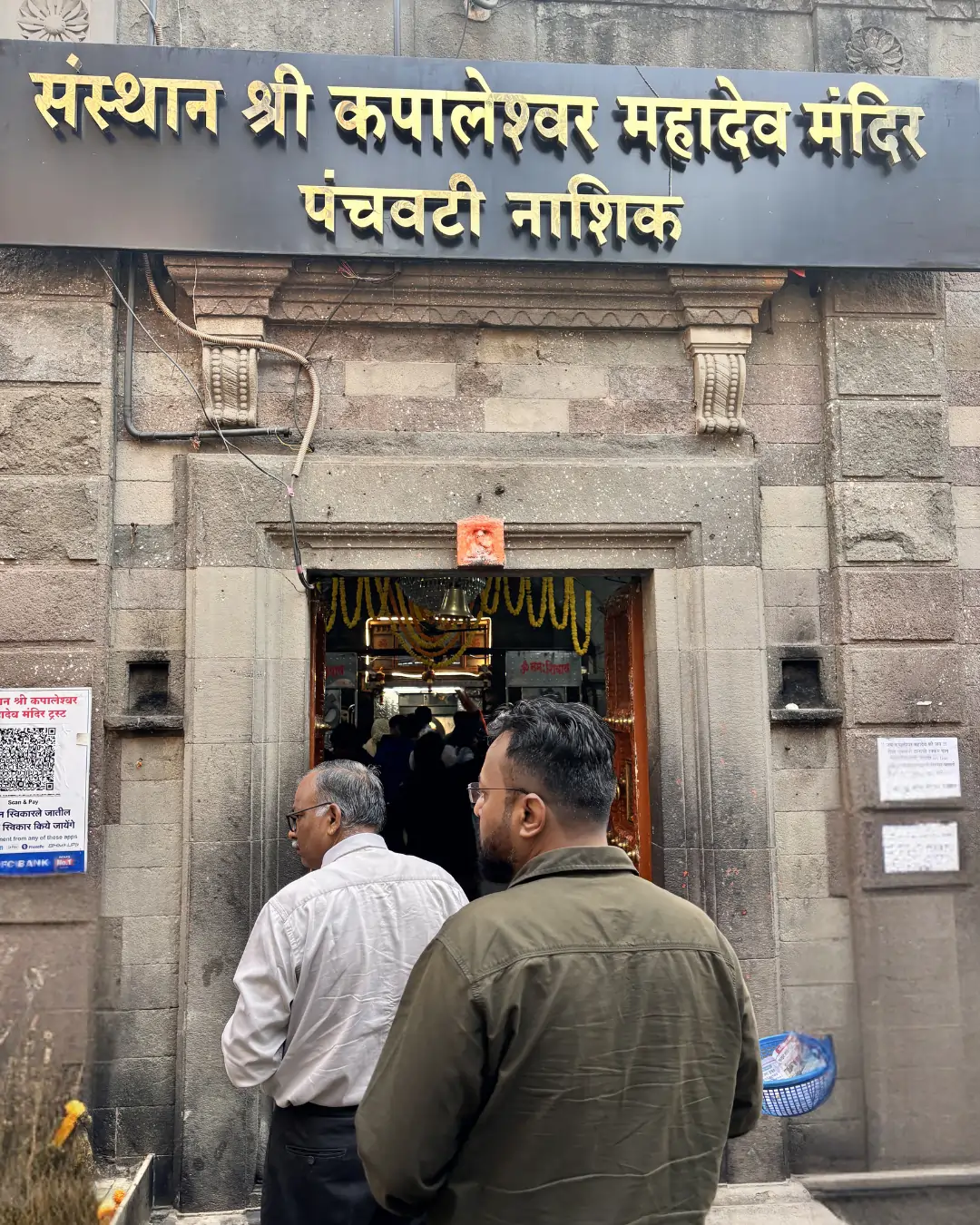
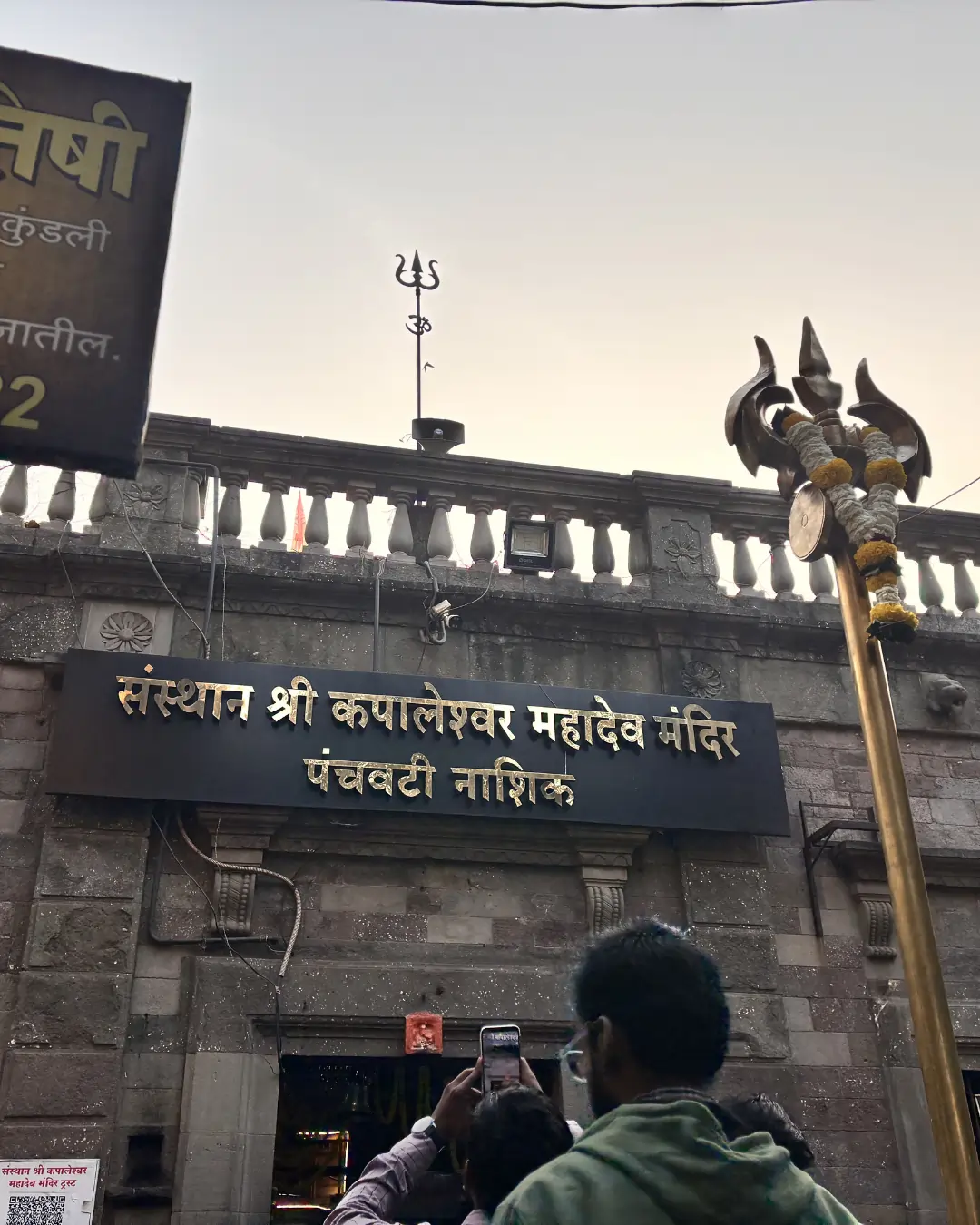
Kapaleshwar Mahadev Mandir, Nashik
No-Nandi Shiva Temple in the World
Opening Hours
5:30 AM – 9:00 PM
Aarti Timings
Morning: 7:00 AM
Evening: 7:00 PM
Location
Panchavati, Nashik
Near Ramkund
Temple Timings & Rituals – Kapaleshwar Temple, Nashik
Opening Hours
- Daily Opening: 5:00 AM – 9:00 PM
- The temple remains open throughout the day.
- On Mondays, timings may extend due to special Shiva rituals.
🔔 Morning Aarti – 7:00 AM
Begin your day with divine blessings as the temple fills with the sound of bells and sacred chants.
🌇 Evening Aarti – 7:00 PM
A peaceful and spiritual experience with glowing lamps and a serene atmosphere near the Godavari river.
👑 Silver Crown Pooja (Mukut Darshan) – Every Monday
Lord Shiva is adorned with a silver crown, making Monday a highly auspicious day for devotees.
🚩 Palkhi Procession – Every Monday (5:30 PM)
A traditional procession where the Lord’s palkhi travels to Ramkund and returns, creating a devotional vibe across the area.
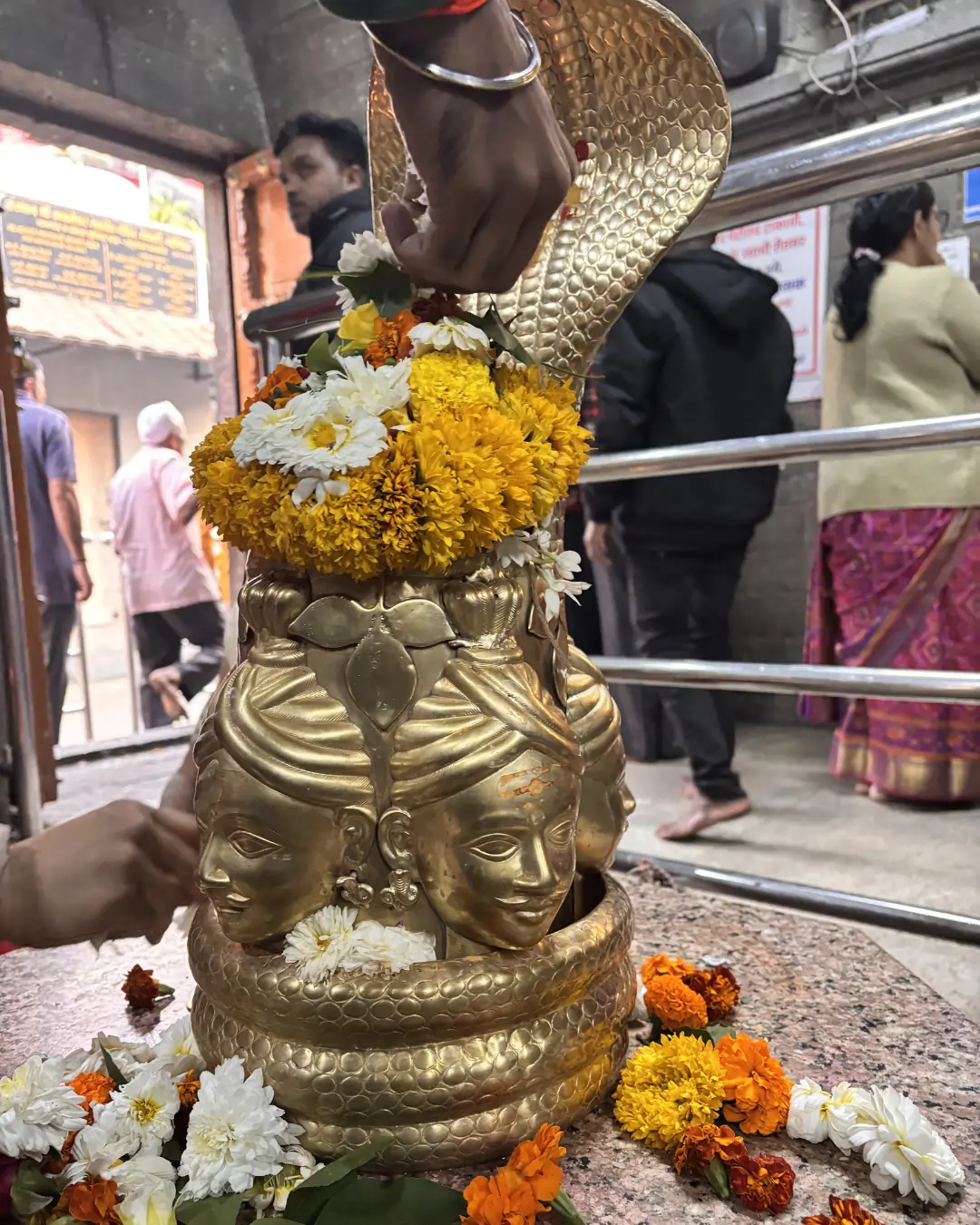
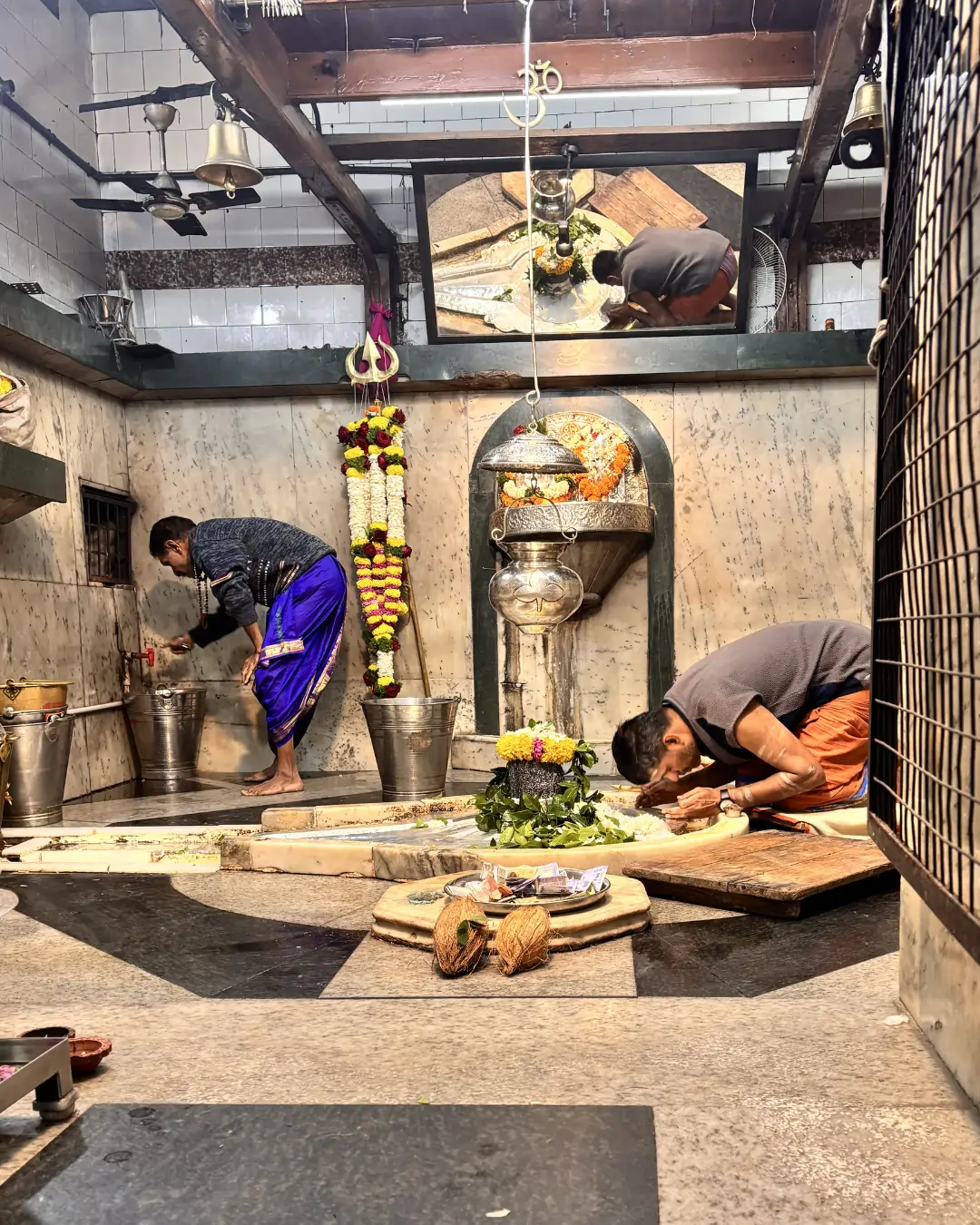
Unlike most Shiva temples, Kapaleshwar Temple does NOT have a Nandi (bull) idol in front of the Shiva Lingam, which makes it spiritually unique.
How to Reach Kapaleshwar Mandir
By Train
10 km from Nashik Road Station.
Bus
5–6 km from CBS (Central Bus Stand), Nashik
Walking
2–5 minutes from Kalaram Temple & Sita Gufa
Location
Panchavati, near Ramkund
Location: Built on a hillock overlooking Ramkund, the most sacred spot in Panchavati.
Confluence: The temple stands where the Aruna, Varuna, and Saraswati rivers merge into the Godavari.
The Blessing: It is believed that praying here is equal to visiting all 12 Jyotirlingas.
- 📸 Photography: Strictly prohibited inside the inner sanctum where the Shivalinga is located. You may take photos in the outer areas, but be respectful of others praying.
- 🎒 Bags & Lockers: There is no official locker facility. The temple is on a hill with narrow paths, so avoid carrying heavy bags or laptops. Leave them in your hotel or car. Watch out for pickpockets in the crowds.
- 🩴 Footwear: You must leave your shoes at the stands near the bottom of the steps.
Do not try to drive your car into the narrow lanes directly in front of the temple; you will get stuck.
- The Location: Park your car at the Nilkantheshwar (Sai Baba) Temple Parking area near the riverbank.
- Why here? It is the closest open space to the temple. From here, it is a very short walk to the base of the Kapaleshwar steps.
- Charges: Approximately ₹30 – ₹50.
To reach the Lord, you must climb the hill.
- The Climb: There are about 30 to 50 stone steps leading up to the temple.
- The Risk: These ancient steps are very steep. One step is much higher than a normal modern stair. They can be slippery during the rainy season or early morning dew.
Advice: Hold the railings and watch your footing carefully. If you are traveling with elderly relatives, they will need strong support to climb these high steps.
Kapaleshwar Temple Festivals 2026
| Festival | Date (2026) |
|---|---|
|
Mahashivratri |
February 15, 2026 |
|
Shravan Month (Somvar Special) |
August 2026 |
|
Tripurari Purnima (Dev Diwali) |
November 24, 2026 |
|
Kumbh Mela Beginning |
October 31, 2026 |
|
Pradosh Vrat |
Twice Every Month |
The Story of Kapaleshwar Mahadev: The Lord of the Head
The Kapaleshwar Mahadev Mandir in Nashik is a unique site—it is the only Shiva temple in the world where you will not find a Nandi statue sitting in front of the Lo
The Divine Legend (The Puranas)
This story is recorded in the Padma Purana, narrated by the holy saint Markandeya Rishi.
- The Sin of Brahma Hatya: Long ago, Lord Brahma had five faces. Four were used to speak the Vedas, but the fifth face began to insult Lord Vishnu and Lord Shiva. In a fit of anger, Lord Shiva cut off Brahma’s fifth head. Because Brahma was a Brahmin, Shiva was caught by the sin of Brahma Hatya (killing a Brahmin). No matter where he traveled, he could not find peace.
- The Conversation at Panchavati: During his travels, Lord Shiva arrived at the house of a Brahmin named Dev Sharma in Panchavati. While resting, he overheard a cow and her calf talking. The calf (who was Nandi reborn) told his mother that he would take revenge on Dev Sharma for mistreating him. The mother warned that killing a Brahmin is a great sin. The calf replied, “Even Lord Shiva has committed this sin, but I know the way to wash it away.”
- The Miracle at the River: The next morning, the calf attacked the Brahmin and committed the sin. To clean himself, the calf jumped into the holy Godavari River at the spot where the Aruna and Varuna rivers meet. When he came out of the water, his black color had turned back to pure white—a sign that his sin was gone.
- Why No Nandi? Because the calf (Nandi) showed Lord Shiva the path to freedom from his sin, Shiva accepted Nandi as his Guru (Teacher). Out of respect, Lord Shiva did not place Nandi in the usual spot of a servant. This makes it the only temple where the Lord bows to the wisdom of his Guru.
Shiva Becomes the Student: Seeing this miracle, Lord Shiva also bathed in the water and was freed from his sin. Lord Vishnu then established the Shivling here and named it “Kapaleshwar,” meaning “The Lord who removed the head (Kapala).”
Read More - The Meaning of Kapaleshwar
The name Kapaleshwar comes from the word “Kapala” (Head). While it refers to the story of the “Lord who removed the head,” it has a much deeper spiritual meaning for devotees:
- The Removal of Ego: In our tradition, the head represents pride and ego. By “removing the head,” Lord Shiva teaches us to cut away our pride and become humble before the Divine.
- The Power of Forgiveness: It marks the exact spot where Lord Shiva was freed from his heaviest burden. It shows us that no matter how big our mistakes are, we can find peace and a fresh start through prayer and the holy water of Ramkund.
- The Teacher’s Lesson: Because Lord Shiva accepted the advice of Nandi (the calf) to wash away his sin, the name Kapaleshwar also reminds us that true wisdom can come from anywhere, and we must always be ready to learn.
The Historical Timeline
The stone temple we see today has a long history of destruction and rebirth, recorded in Maratha and Mughal history.
- 1680 (The Destruction): The original temple and 25 others nearby were destroyed by a Sardar (commander) of the Mughal Emperor Aurangzeb.
- 1738 (The First Rebuild): The local Koli community took the initiative to rebuild the temple, spending ₹5,000 to bring the shrine back to life.
- 1763 (The Peshwa Era Glory): During the peak of the Maratha Empire, two commanders transformed the temple:
- Jagajivanrao Pawar spent ₹10,000 to build the grand main hall (Sabhamandap).
- Krishnaji Pawar Patil spent ₹15,000 to build the stone stairs that pilgrims climb today.
- 2024 (Modern Times): The Sansthan Shri Kapaleshwar Mahadev Mandir Trust completed a full renovation of the temple to preserve its beauty.
Historical Note: The costs mentioned (₹10,000 and ₹15,000) are based on historical records from the 1883 Gazetteer. In the 1700s, the Maratha Empire used gold Honns and silver Chandori Rupees. These amounts represent a massive fortune in that era, equivalent to several crores of rupees today.
Kapaleshwar Mandir: Frequently Asked Questions (FAQs)
This is the only Shiva temple in the world where Nandi is not in front of the Shivalinga. According to the Brahma Purana, Nandi acted as a “Guru” (Teacher) to Lord Shiva by telling him to bathe in Ramkund to wash away a sin. Out of respect for his teacher, Lord Shiva did not place Nandi in the usual servant’s position.
The original temple was destroyed in 1680 by Mughal forces. It was first rebuilt by the Koli community in 1738 for ₹5,000. In 1763, Maratha Sardars Jagajivanrao Pawar and Krishnaji Pawar Patil spent ₹25,000 to add the grand main hall and the stone steps leading from the river.
No, entry to the temple is completely free for all devotees. You only need to pay a small nominal fee if you use the supervised footwear stands at the base of the hill.
There are approximately 30 to 50 stone steps. Note that these are ancient “high-rise” steps and are much steeper than modern stairs. Elderly visitors or those with knee issues should take them slowly with support.
The Palkhi (chariot) procession of Lord Kapaleshwar takes place every Monday between 5:30 PM and 7:00 PM. The procession travels from the temple to the Ramkund Ghat and back.
Do not drive into the narrow Panchavati lanes. The closest and easiest parking is the Nilkantheshwar (Sai Baba) Temple Parking area near the riverbank. It is a very short walk from there to the temple steps.
Photography is strictly prohibited inside the Gabhara (Inner Sanctum) to maintain sanctity. However, you are generally allowed to take photos of the architecture in the outer courtyard and the view of the river from the top.