Trimbakeshwar Simhastha Kumbh Mela 2026 Flag Revealed: Meaning and Significance

Key Highlights –
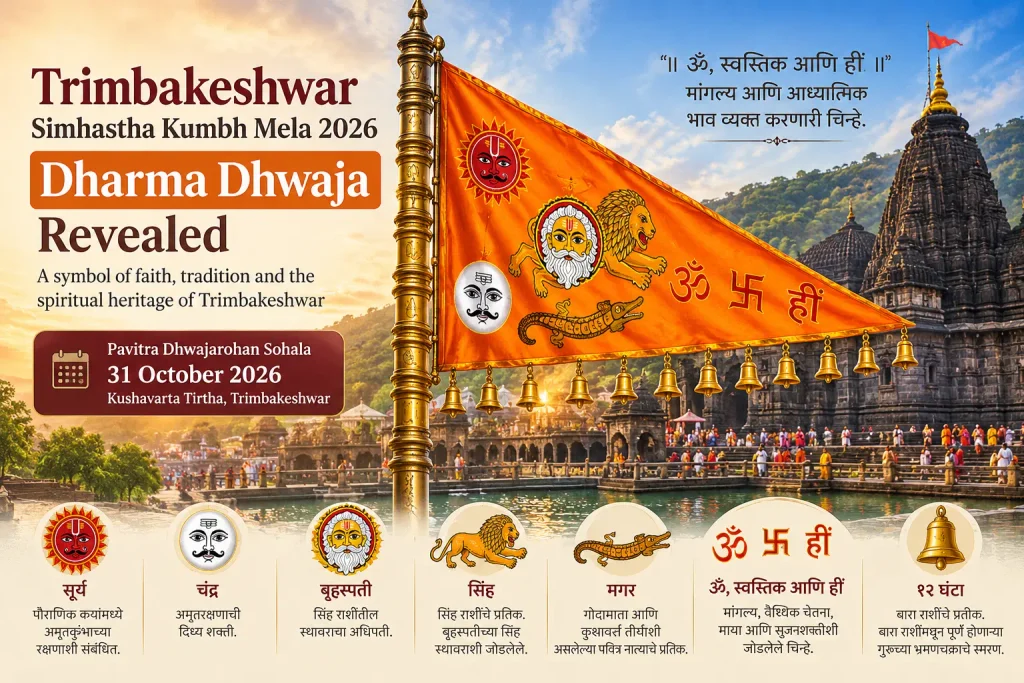
- The Dharma Dhwaja features sacred symbols, including Om, Swastika, Hrim, the Sun, Moon, Brihaspati, a lion, and twelve bells.
- The lion symbol represents Brihaspati (Jupiter) in Leo, according to the shared description of the flag.
- The crocodile symbol represents the spiritual connection between the Godavari River and Kushavarta Tirtha.
- The twelve bells represent the twelve zodiac signs and Brihaspati’s journey through the zodiac, according to the flag’s accompanying description.
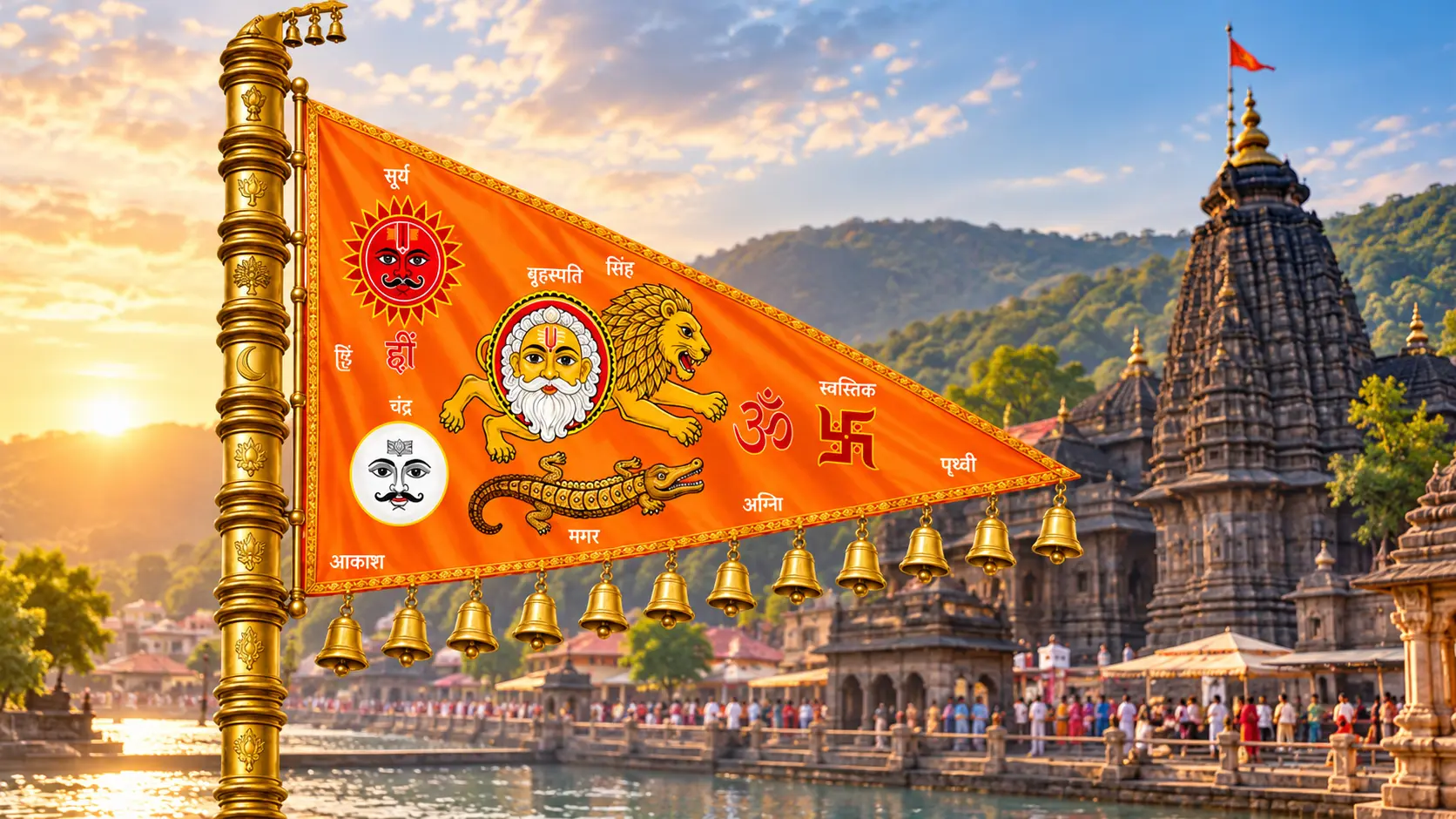
The Trimbakeshwar Simhastha Kumbh Mela 2026 flag, known as the Dharma Dhwaja or Dharmadhwaj, showcases sacred symbols associated with Hindu religious traditions and the spiritual heritage of Trimbakeshwar. The newly presented triangular saffron flag features a lion, a crocodile, celestial symbols, sacred mantras and twelve bells, each carrying symbolic significance explained in the accompanying announcement.
The flag has been presented ahead of the Pavitra Dhwajarohan Sohala (पवित्र ध्वजारोहण सोहळा), scheduled for 31 October 2026 at Kushavarta Tirtha, Trimbakeshwar, according to the published announcement.
The new Trimbakeshwar Dharma Dhwaja highlights the religious traditions associated with the Shri Trimbakeshwar Jyotirlinga Temple and the sacred waters of Kushavarta Tirtha. Its distinctive design brings together spiritual imagery and elements connected with the traditional understanding of Simhastha.
For devotees searching for the new Trimbakeshwar Kumbh Mela flag photo, the flag offers an opportunity to explore the religious symbols and traditions associated with this important pilgrimage.
Trimbakeshwar Simhastha Kumbh Mela 2026 Flag: Key Details
The newly presented Trimbakeshwar Simhastha Dharma Dhwaja features a triangular saffron design decorated with religious symbols and hanging bells.
Here are the key details highlighted in the announcement:
- Flag name: Simhastha Dharma Dhwaja or Dharmadhwaj
- Ceremony: Pavitra Dhwajarohan Sohala
- Date: 31 October 2026
- Location: Kushavarta Tirtha, Trimbakeshwar
- Flag design: Triangular saffron flag featuring religious symbols and twelve bells
- Associated festival: Trimbakeshwar Simhastha Kumbh Mela
The flag’s design connects traditional religious imagery with the spiritual and astrological traditions associated with Simhastha.
What Is the Dharma Dhwaja of Trimbakeshwar Simhastha Kumbh Mela?
The Dharma Dhwaja is a sacred religious flag associated with the traditions and ceremonies of Simhastha Kumbh Mela.
The Trimbakeshwar Dharma Dhwaja features a distinctive triangular saffron design incorporating sacred symbols, celestial imagery and decorative bells. The accompanying explanatory graphics describe the intended significance of these elements through references to Hindu mythology and religious traditions.
Trimbakeshwar holds particular importance in Hindu pilgrimage because it is home to the Shri Trimbakeshwar Jyotirlinga Temple, one of the twelve Jyotirlingas dedicated to Lord Shiva.
Nearby, Kushavarta Tirtha is a revered sacred water body associated with the Godavari River and the religious traditions of the Simhastha pilgrimage.
The Dharma Dhwaja represents an important part of the ceremonial identity of Trimbakeshwar Simhastha.
Meaning of the Symbols on the Trimbakeshwar Dharma Dhwaja
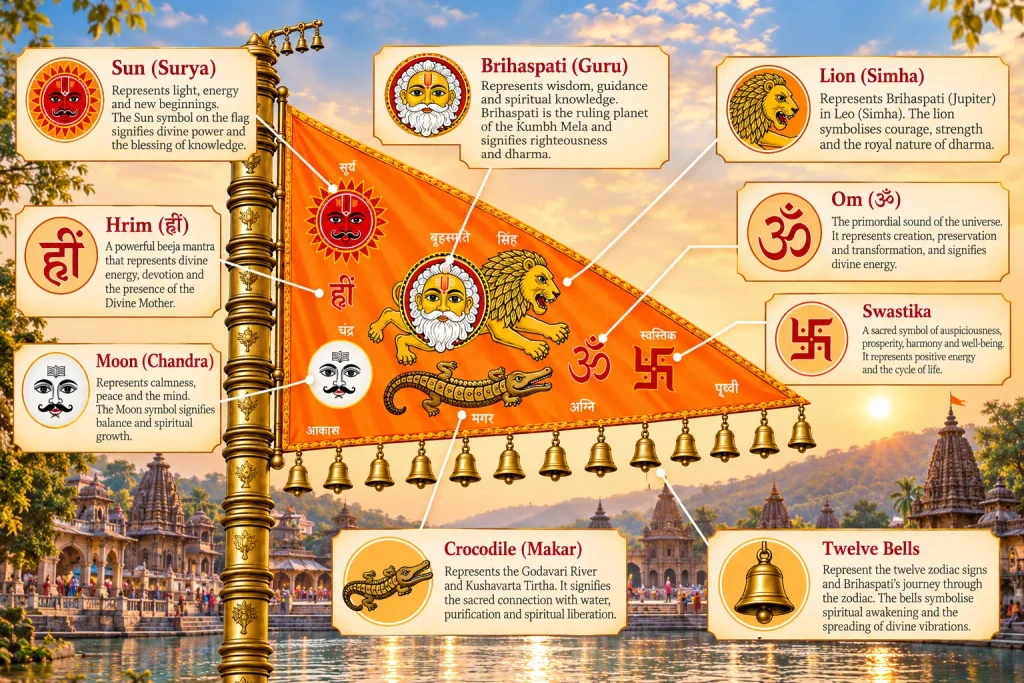
The new Trimbakeshwar Kumbh Mela flag features several distinctive symbols. The accompanying announcement graphics explain their intended meanings and connections with Hindu religious traditions.
1. Om, Swastika and Hrim
The flag features three important sacred symbols: Om, the Swastika and Hrim.
Om (ॐ) is a sacred syllable associated with spiritual practice, meditation and ultimate reality in Hindu traditions.
Swastika (स्वस्तिक) is an ancient auspicious symbol associated with well-being, prosperity and good fortune.
Hrim (ह्रीं) is a sacred seed syllable used in certain Hindu devotional and tantric traditions.
Together, these symbols express auspiciousness and spiritual significance within the religious context of the Dharma Dhwaja.
2. Sun, Moon and Brihaspati
The flag’s explanatory graphics highlight the Sun, Moon and Brihaspati, the Sanskrit name for Jupiter.
The accompanying material connects these celestial figures with Hindu mythological traditions concerning the protection of Amrit, the nectar of immortality.
Jupiter also holds significance in the traditional astrological calculations associated with Simhastha. The festival’s name is linked to Jupiter’s transit through Leo, known as Simha in Sanskrit.
These celestial references connect the flag’s design with the mythological and astrological traditions surrounding Trimbakeshwar Simhastha.
3. The Lion: A Symbol Associated with Simhastha
The lion is one of the most prominent figures depicted on the Trimbakeshwar Dharma Dhwaja.
According to the accompanying explanatory graphics, the lion represents the connection between Simhastha and Jupiter’s position in Leo.
The lion also appears widely in Hindu religious imagery, where it can symbolise strength, courage and divine power.
Its presence gives the Trimbakeshwar Simhastha Kumbh Mela flag a distinctive identity connected with the festival’s traditional astrological significance.
4. The Crocodile: Connection with Godavari and Kushavarta Tirtha
A crocodile is another distinctive element of the Trimbakeshwar flag design.
The accompanying graphics associate this symbol with the Godavari River and Kushavarta Tirtha.
Kushavarta Tirtha is an important sacred water body in Trimbakeshwar and a significant pilgrimage site during Simhastha Kumbh Mela.
The Godavari River holds an important place in the religious identity of the region, and its sacred bathing traditions form part of the Simhastha pilgrimage.
According to the published explanation, the crocodile imagery connects the flag’s design with the sacred waters and religious geography of Trimbakeshwar.
5. The Twelve Bells on the Trimbakeshwar Kumbh Mela Flag
One of the distinctive features of the Dharma Dhwaja is the row of twelve bells hanging along the lower edge of the triangular flag.
According to the accompanying graphics, these bells represent the twelve zodiac signs and the astrological cycle associated with Simhastha.
The festival is traditionally linked to astrological calculations involving Jupiter, with successive Simhastha gatherings taking place approximately twelve years apart.
The twelve bells give the Trimbakeshwar Simhastha flag a distinctive appearance while reinforcing its connection with the festival’s traditional calendar.
6. Dashadisha: The Ten Directions
The flag announcement also describes Dashadisha, referring to the ten directions in Hindu cosmological traditions.
The accompanying material interprets this concept as a welcoming gesture towards deities arriving from all directions.
The ten directions represent the surrounding expanse of the universe in traditional cosmological interpretations.
This concept adds another layer of spiritual symbolism to the Trimbakeshwar Dharma Dhwaja.
Trimbakeshwar Dhwajarohan 2026: Date and Significance
Dhwajarohan means the ceremonial hoisting of a flag. In the context of Simhastha Kumbh Mela, the ceremony marks an important milestone in the festival’s religious calendar.
The Marathi phrase Pavitra Dhwajarohan Sohala refers to the sacred flag-hoisting ceremony.
According to the published announcement, the Trimbakeshwar ceremony is scheduled for 31 October 2026 at Kushavarta Tirtha.
The Dharma Dhwaja and Dhwajarohan have different meanings:
- Dharma Dhwaja: The sacred religious flag.
- Dhwajarohan: The ceremonial act of hoisting the flag.
- Dhwaj Stambh: The pillar or pole on which the flag is mounted.
The ceremony highlights the religious traditions associated with Trimbakeshwar and marks an important milestone in preparations for the Simhastha period.
Why Is Kushavarta Tirtha Important During Simhastha?
Kushavarta Tirtha is one of the most important sacred sites in Trimbakeshwar.
Located near the Shri Trimbakeshwar Jyotirlinga Temple, it holds an important place in local religious traditions and is associated with sacred bathing during Simhastha Kumbh Mela.
Pilgrims visit Trimbakeshwar to seek blessings at the Jyotirlinga temple and participate in religious observances connected with the sacred water body.
The Dharma Dhwajarohan ceremony at Kushavarta Tirtha highlights the importance of this pilgrimage centre in the Simhastha tradition.
Its association with the Godavari, the Jyotirlinga temple and sacred bathing makes Kushavarta Tirtha an important part of Trimbakeshwar’s religious heritage.
Trimbakeshwar Simhastha Kumbh Mela 2026 Flag Photo
The new Trimbakeshwar Dharma Dhwaja features a triangular saffron design with a lion, a crocodile, celestial figures, sacred symbols and twelve bells.